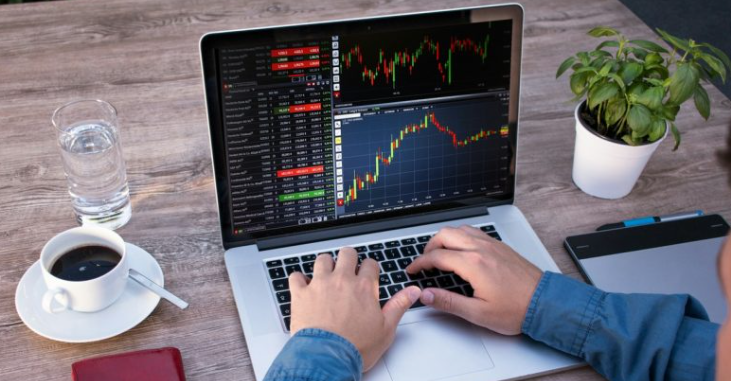
The foreign exchange (forex) market is the largest and most dynamic financial market in the world, where more than $7 trillion is traded daily. Traders rely on information — from economic news to price patterns — to make decisions. But in today’s digital era, the game has changed completely.

The rise of Big Data has revolutionized how forex trading works. Instead of depending on guesswork or small sample analysis, traders can now analyze massive amounts of real-time data to identify trends, predict market moves, and build profitable strategies.
In this post, we’ll explore how Big Data impacts forex trading in 2025, how it helps both institutions and individual traders, and why it’s becoming the most powerful tool in the trading world.

What is Big Data in Forex Trading?
Big Data refers to extremely large and complex sets of information that traditional systems can’t easily process. In forex trading, this includes:

- Historical price data of thousands of currency pairs
- Real-time tick data from global exchanges
- Economic indicators and financial news
- Social media sentiment
- Central bank statements, interest rate updates, and political headlines
By analyzing these enormous data sets, traders can discover patterns that were previously invisible. This allows them to make smarter, faster, and more data-driven trading decisions.
How Big Data is Collected in Forex
Modern forex brokers and financial technology companies use advanced technology to gather and analyze trading information from multiple sources. Data comes from:
- Market Feeds – Every price change and quote update.
- Economic Calendars – Interest rate decisions, inflation data, and employment reports.
- Social Platforms – Tweets, news, and market sentiment.
- Broker Platforms – Trader behavior, open positions, and order flow.
- Machine Learning Systems – Algorithms that constantly learn from market behavior.
With these sources combined, analysts can study both the macro trends (like global inflation) and micro patterns (like short-term volatility) to make informed trading choices.
Why Big Data Matters in Forex Trading
In forex, speed and accuracy make all the difference. Big Data gives traders both.
1. Real-Time Market Insights
Forex prices can change within seconds. Big Data allows traders to see live market movements and react instantly. Automated trading systems use data analytics to spot profitable entries and exits before the average trader even notices.
2. Improved Risk Management
Big Data analytics help identify risk exposure. For example, a trader can use volatility data to determine whether their stop loss and take profit levels are realistic in current market conditions.
3. Sentiment Analysis
With the help of Natural Language Processing (NLP), Big Data systems can scan millions of news articles, tweets, and posts to gauge trader sentiment. If the market is overly bullish or bearish, smart traders can position themselves ahead of the crowd.
4. Predictive Analytics
Using machine learning, Big Data can forecast potential price directions by comparing current market conditions with thousands of historical scenarios. This predictive ability allows traders to anticipate trends rather than just react to them.
Real-World Examples of Big Data in Forex Trading
Example 1: Predicting Currency Volatility
During the 2022–2023 interest rate hikes by the U.S. Federal Reserve, traders using Big Data analytics were able to predict increased volatility in USD pairs weeks before it happened. Data models detected shifts in market sentiment, rising inflation expectations, and changes in futures contracts — all pointing to stronger dollar movements.
Example 2: Central Bank Policy Tracking
Big Data tools can automatically track global central bank speeches, policy statements, and meeting notes. For instance, when the European Central Bank hinted at tightening policy, data-driven algorithms identified a potential euro rebound before most manual traders reacted.
Example 3: Crisis Event Reactions
When the Russia-Ukraine war began, Big Data platforms immediately analyzed news frequency, oil prices, and commodity correlations — helping traders anticipate the sharp fall in the Russian ruble and the rise in safe-haven currencies like USD and CHF.
Big Data and AI: A Powerful Combination
Artificial Intelligence (AI) and Big Data work hand-in-hand. AI systems need data to learn, and Big Data provides exactly that. By processing millions of data points, AI-driven algorithms can find hidden relationships between market factors.
For example:
- AI bots can identify price patterns faster than humans.
- Machine learning can adapt strategies to changing volatility.
- Deep learning systems can filter out “noise” from useful data.
This synergy has led to the creation of AI trading systems that automatically execute trades based on Big Data insights — minimizing emotion and maximizing precision.
Benefits of Using Big Data in Forex Trading
- Enhanced Decision-Making: Traders make choices based on data, not emotion.
- Faster Market Reaction: Automated systems act instantly on new data.
- More Accurate Forecasts: Predictive analytics improve win rates.
- Transparency and Pattern Discovery: Helps uncover unseen trends in price action.
- Strategic Advantage: Gives traders an edge in identifying high-probability trades.
Challenges of Big Data in Forex Trading
Despite its advantages, Big Data isn’t a magic solution. Traders must also understand its limitations:
- Data Overload: Too much information can cause confusion without proper tools.
- Cost and Technology: High-quality data feeds and storage systems are expensive.
- Interpretation Errors: Misreading correlations can lead to false predictions.
- Privacy and Security: Handling massive data sets requires secure and ethical management.
For best results, Big Data must be combined with solid risk management, emotional discipline, and an understanding of global economics.
The Future of Big Data in Forex Trading (2025 and Beyond)
As technology evolves, Big Data will continue to shape the forex market in the following ways:
- Quantum Computing: Faster processing for real-time analysis of billions of trades.
- Deeper AI Integration: AI models that continuously learn from global data.
- Blockchain Transparency: Decentralized data storage for more secure trading insights.
- Personalized Trading Systems: Algorithms that adapt to each trader’s unique style.
In short, Big Data will make forex trading more efficient, accurate, and accessible than ever before.
Conclusion
Big Data has transformed forex trading into a science of precision and prediction. By analyzing real-time information, trader behavior, and global trends, it helps traders make smarter decisions, manage risks, and adapt to changing markets.
In 2025 and beyond, those who harness the power of Big Data — alongside automation, AI, and strong discipline — will have a clear advantage over traditional traders.
Forex has always been about information. But now, success belongs to those who know how to use Big Data effectively.
Read more: The Future of AI and Automation in Forex Trading (2025 Edition)