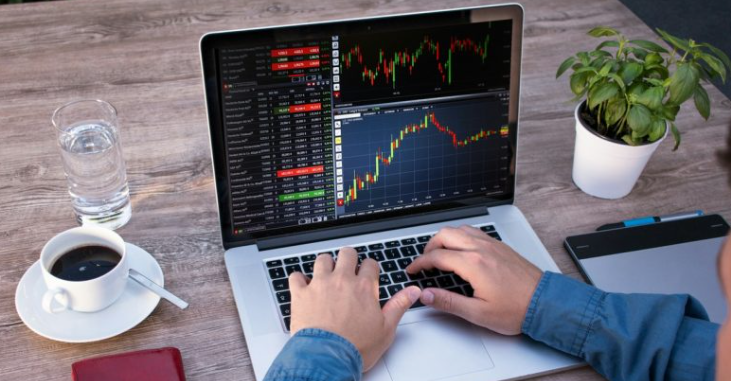
Forex trading has changed more in the last five years than in the previous two decades. Thanks to Artificial Intelligence (AI) and automation, traders now use powerful algorithms, predictive models, and smart bots to make decisions faster and more accurately than ever before.

In 2025, AI is no longer a futuristic concept — it’s the driving force behind how traders analyze data, execute trades, and manage risk in the $7 trillion-per-day forex market.
What Is AI in Forex Trading?
AI in forex trading refers to the use of machine learning algorithms and automated systems that can analyze vast amounts of market data, identify trends, and execute trades automatically.
Unlike traditional manual trading, AI doesn’t rely on human emotion. It reacts purely to data — using technical indicators, price action, and historical performance to forecast possible market moves.

For example:
- An AI bot can detect a price breakout pattern in milliseconds.
- It can backtest a strategy across multiple timeframes instantly.
- It can execute trades even when the trader is sleeping.
This is why AI-based trading systems have become so popular among retail and institutional traders alike.
How AI Automation Works in Forex
AI automation combines data science, algorithmic logic, and trading psychology into one system. Here’s how the process usually works:
- Data Collection: AI gathers real-time price data, news, and fundamental indicators from global markets.
- Analysis & Prediction: The machine learning model identifies possible price directions using patterns it has learned from the past.
- Decision Making: The system decides when to buy or sell a currency pair.
- Automated Execution: The AI bot opens, manages, and closes trades automatically based on pre-set rules.
This creates a 24/7 trading cycle with minimal human intervention — allowing traders to focus on strategy development and system optimization.
Benefits of AI and Automation in Forex Trading
1. Emotion-Free Trading
Emotions like fear and greed often ruin good trades. AI eliminates emotional bias and follows strict, rule-based logic — ensuring consistency in every trade.
2. Speed and Efficiency
AI can process thousands of charts per second and react faster than any human trader. This is crucial during high-volatility market events like central bank announcements.
3. Backtesting and Optimization
AI bots can test strategies across historical data instantly. You can easily see how your system would have performed in different market conditions.
4. 24/7 Trading
The forex market never sleeps — and neither do AI bots. Automated systems can trade round the clock, capturing opportunities you might miss manually.
5. Advanced Risk Management
AI models can calculate risk-to-reward ratios in real time and automatically adjust stop loss or take profit levels based on volatility.
The Role of Machine Learning in Forex Prediction
Machine learning (ML) is a branch of AI that helps systems learn from data instead of relying on fixed rules. In forex, ML models like neural networks, support vector machines (SVM), and random forests are used to forecast price movements.
For example:
- Neural networks can analyze candlestick patterns and market sentiment.
- Reinforcement learning helps AI “learn” from trading outcomes — improving its decision-making over time.
- Natural language processing (NLP) allows AI to analyze financial news and social media trends to predict market reactions.
This combination makes AI-based forex systems smarter, faster, and more adaptable than traditional automated strategies.
Real-World Use of AI Trading Systems
Many professional traders and funds already use AI to manage portfolios or run automated strategies. Some of the most popular AI-based forex platforms include:
- MetaTrader 5 (MT5) – Supports Expert Advisors (EAs) and algorithmic trading bots.
- cTrader Automate – A platform for coding C#-based AI bots with custom strategies.
- ZuluTrade – A social trading platform using AI ranking to filter the best-performing traders.
- TradingView AI Tools – Uses predictive models and backtesting powered by AI indicators.
These tools help traders test, optimize, and automate strategies — bridging the gap between human intelligence and machine precision.
The Future of AI in Forex Trading (2025 and Beyond)
The future of forex trading lies in intelligent automation. Here’s what we can expect next:
1. AI-Powered Sentiment Analysis
AI systems will interpret trader emotions by scanning global news, tweets, and even trading forums to forecast price reactions before they happen.
2. Quantum Computing
As quantum technology evolves, forex prediction models will become even more accurate — analyzing billions of price combinations in seconds.
3. Fully Autonomous Trading Systems
We’ll soon see bots that don’t just execute trades but also adapt and evolve without manual reprogramming — just like human traders learning from mistakes.
4. Integration with Decentralized Finance (DeFi)
AI bots will interact directly with blockchain-based forex platforms, executing peer-to-peer currency swaps without middlemen.
Challenges and Risks of AI Trading
While AI automation offers huge potential, it’s not perfect.
Here are some risks to consider:
- Over-optimization: Relying too much on historical data can make systems fail in new market conditions.
- Technical errors: Connection loss, API errors, or faulty code can trigger unexpected losses.
- Market unpredictability: Even the smartest AI can’t always predict sudden political or economic shocks.
- Dependence on data quality: Poor or delayed data feeds can ruin an otherwise solid AI strategy.
That’s why combining AI insights with human judgment still produces the best results.
Conclusion – Future of AI in Forex Trading
AI and automation are transforming forex trading from a manual, emotion-driven game into a data-powered science. In 2025 and beyond, traders who can combine their own market experience with AI-driven tools will have the strongest edge in the market.
Whether you’re a beginner learning about automated systems or an experienced trader optimizing your Expert Advisor — the message is clear:
AI is not replacing traders; it’s empowering them.
🔗 Related Reading:
- Best 3 Forex Brokers in the USA 2025 – Trusted & Regulated American Brokers
- Best Forex Brokers in 2025: Top Picks for Retail Traders
- Trading Psychology: Why Your Mindset Matters More Than Your Strategy