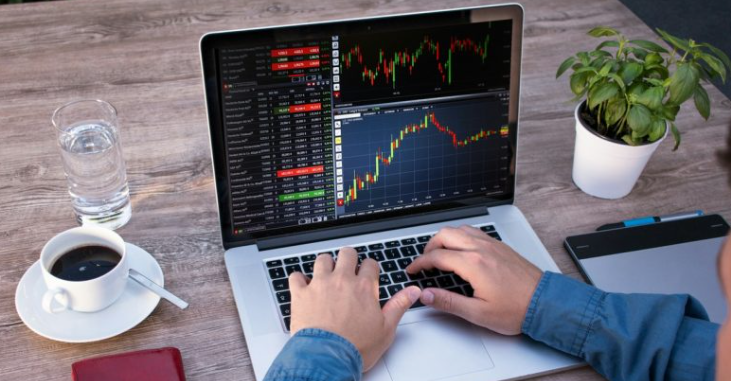
The forex market has come a long way from the days of handwritten charts, phone-based trades, and slow data analysis. Today, trading in the foreign exchange (forex) market has become faster, smarter, and more accessible than ever — thanks to technology, automation, and Artificial Intelligence (AI).

Over the last two decades, the industry has undergone a digital revolution. Retail traders who once relied on basic chart tools now use AI-powered platforms that analyze billions of data points in real time. The result is a more competitive, data-driven, and efficient trading ecosystem.
In this article, we’ll explore how online forex trading evolved from manual systems to AI algorithms, what technologies are driving this transformation, and what the future holds for traders.
The Early Days of Forex Trading
Before the rise of online platforms, forex trading was primarily limited to large institutions, banks, and professional traders. Trades were executed via telephone or physical terminals, and prices were updated manually.

Key Characteristics of Early Forex Trading:
- Limited access: Only banks and corporations could participate.
- Manual analysis: Traders relied on charts drawn by hand or early computer models.
- Slow execution: Orders were placed through phone calls or brokers.
- High entry barriers: High capital requirements restricted small investors.
This setup began to change in the late 1990s when the internet revolutionized global finance, giving birth to online forex trading platforms.
The Birth of Online Forex Trading Platforms
In the early 2000s, companies like MetaQuotes introduced platforms such as MetaTrader 4 (MT4), which became the global standard for online retail trading. For the first time, individuals could access real-time price data, use charting tools, and execute trades directly on their computers.
The advantages of early online platforms:
- Real-time market data and price charts
- Technical indicators and automated scripts (EAs)
- Low entry barriers for small traders
- 24/5 trading access across the globe
This period marked the beginning of the democratization of forex trading. Anyone with a computer and internet connection could now participate in the largest financial market in the world.
The Shift Toward Automation
As technology advanced, traders started looking for ways to automate their strategies. This led to the rise of Expert Advisors (EAs) — software programs that could analyze market data and execute trades automatically based on predefined rules.
Benefits of Automation:
- Speed: Trades executed within milliseconds
- Emotion-free trading: No fear or greed
- 24-hour operation: Systems could trade even when the trader was offline
- Backtesting capabilities: Test strategies on historical data before going live
Automated trading made forex more efficient and opened opportunities for consistent, rule-based strategies. However, it also required traders to understand programming, data analysis, and optimization.
The Rise of Artificial Intelligence (AI) in Forex Trading
Over the past decade, Artificial Intelligence (AI) and machine learning (ML) have taken forex automation to the next level. Unlike traditional EAs that follow fixed rules, AI-powered systems learn from data, adapt to changing market conditions, and improve over time.
How AI is Changing Forex Trading:
- Predictive Analytics:
AI models analyze massive datasets — including price history, sentiment, and economic indicators — to forecast potential market movements. - Pattern Recognition:
Machine learning algorithms identify hidden trends or anomalies that humans might miss. - Sentiment Analysis:
AI tools now monitor social media, news, and market sentiment to gauge trader psychology in real time. - Risk Management:
Intelligent systems adjust position size and stop-loss dynamically based on volatility and performance metrics. - Algorithmic Execution:
AI-driven trading bots can open and close trades within microseconds to capitalize on small price changes.
Platforms like MetaTrader 5, cTrader, and Proprietary AI Systems from brokers are leading this revolution.
Real-World Example: AI in Action
One of the best examples of AI’s impact is in high-frequency trading (HFT). Large trading firms use AI algorithms that execute thousands of trades per second. These systems rely on:
- Real-time data feeds
- Machine learning models that adapt instantly
- Predictive analytics for short-term price patterns
For retail traders, similar AI tools are available on a smaller scale — offering automated signal generation, copy trading, and portfolio optimization.
The Benefits of AI and Automation in Forex
- Enhanced Accuracy:
Algorithms reduce human error by making data-driven decisions. - Increased Speed:
AI systems analyze and act faster than any manual trader could. - Emotion Control:
Automation removes fear, greed, and hesitation from trading. - 24/7 Trading Potential:
Bots can operate across sessions and adapt to multiple time zones. - Scalability:
Traders can manage multiple strategies simultaneously without manual effort.
Challenges and Risks
Despite its advantages, AI-driven trading is not without challenges:
- Over-Optimization: Some systems perform well in backtests but fail in real markets.
- High Data Dependence: Poor-quality data leads to inaccurate predictions.
- Technical Complexity: AI trading requires coding knowledge and technical understanding.
- Unexpected Market Events: No AI can fully predict black swan events like political shocks or natural disasters.
Successful traders balance technology with strategy, ensuring automation supports their trading plan rather than replaces it.
The Future of Forex Trading
The future of forex lies in intelligent automation — where human insight and machine precision work together. Expect to see:
- AI-driven brokers offering adaptive pricing and spreads
- Blockchain integration for transparent and secure transactions
- Voice-based trading assistants powered by NLP (Natural Language Processing)
- Cloud-based algorithm marketplaces for plug-and-play trading bots
As AI becomes more accessible, traders who embrace it early will have a significant advantage in execution speed, accuracy, and profitability.
Conclusion
The journey of forex trading — from manual charts to AI algorithms — reflects the incredible progress of technology in finance. What began as a market dominated by institutions is now open to anyone with an internet connection and smart tools.
In today’s data-driven environment, AI and automation are not just options — they are necessities for traders who want to stay ahead. The key is to understand how to use these tools effectively, maintain discipline, and continue learning as the market evolves.
Related Reading:
- Top 10 Forex Brokers in Indonesia 2025 – Trusted & Regulated Platforms
- Trading Psychology: Why Your Mindset Matters More Than Your Strategy
- Best Forex Brokers in 2025: Top Picks for Retail Traders