The forex market is known for its speed, liquidity, and unpredictability. With more than $7 trillion traded daily, currency prices can rise or fall within seconds — often due to economic news, global events, or investor sentiment. This constant movement is called volatility, and it is both a challenge and an opportunity for traders.

For some, volatility is a source of fear and losses. For others, it’s the key to making consistent profits. The difference lies in understanding what volatility is, how to measure it, and how to build a strategy that uses it to your advantage.
In this article, we’ll explore what forex volatility means, what causes it, how traders can measure it, and most importantly — how to profit from it safely.
What Is Forex Market Volatility?
Volatility in forex trading refers to how much and how quickly the price of a currency pair changes over time. A highly volatile pair experiences sharp price movements, while a low-volatility pair moves more slowly and steadily.

For example:
- GBP/JPY and XAU/USD (Gold) are considered highly volatile pairs.
- EUR/USD and USD/CHF are generally more stable and less volatile.
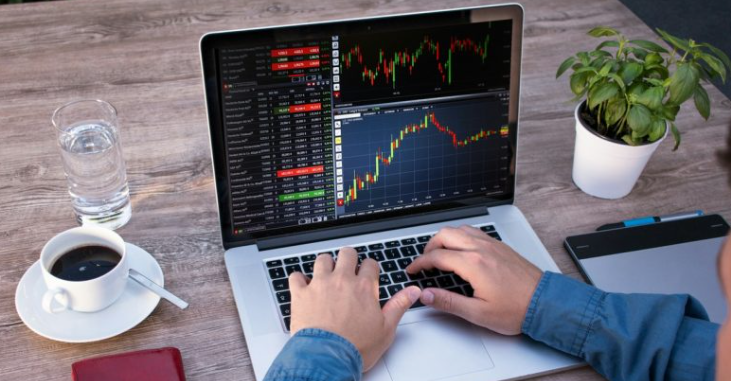
Volatility can be measured by looking at the size of candlesticks, sudden breakouts, or data-based indicators like Average True Range (ATR).
High volatility means greater profit potential but also higher risk. Traders must therefore balance excitement with caution.
What Causes Volatility in the Forex Market?
Forex volatility is driven by a combination of economic, political, and psychological factors. Understanding these causes helps traders predict when the market might become more active.
1. Economic News and Data Releases
Announcements like interest rate decisions, employment data, and inflation reports can cause immediate reactions in currency prices.
Example: When the U.S. Non-Farm Payroll (NFP) report beats expectations, the USD often strengthens sharply.
2. Central Bank Policies
Central banks influence volatility through monetary policies. Rate hikes, dovish statements, or unexpected interventions can shock the market.
Example: When the Swiss National Bank removed the EUR/CHF peg in 2015, the pair moved nearly 30% in a single day.
3. Geopolitical Events
Wars, elections, or political crises can cause traders to move money into “safe-haven” currencies such as the USD, JPY, or CHF.
Example: During the Russia-Ukraine conflict, the ruble collapsed while the dollar and Swiss franc gained value.
4. Market Sentiment and Speculation
Trader emotions and expectations often exaggerate price movements. When a trend becomes crowded, small events can trigger big reactions.
How to Measure Volatility
Professional traders rely on tools and indicators to measure market volatility before entering a trade. Some of the most popular include:
1. Average True Range (ATR)
ATR measures the average movement of a currency pair over a set period. A higher ATR means higher volatility.
If EUR/USD’s ATR jumps from 40 to 80 pips, it indicates increasing price swings and more opportunities.
2. Bollinger Bands
Bollinger Bands expand and contract with volatility. When the bands widen, the market is more volatile. When they narrow, it indicates consolidation.
3. Volatility Index (VIX)
Although mainly used in stock markets, the VIX can provide insights into global investor sentiment. A higher VIX often signals risk aversion and potential forex volatility.
4. Candlestick Patterns
Long wicks and large bodies often show high volatility. Sudden reversals or large gaps between candles can also indicate volatile conditions.
How to Trade in Volatile Market Conditions
Trading during volatile periods can be profitable if managed correctly. Here are some proven strategies that experienced traders use:
1. Use Wider Stop-Loss and Take-Profit Levels
In volatile conditions, prices can fluctuate rapidly before moving in your favor. A wider stop-loss allows room for natural price movement and prevents premature exits. Similarly, wider take-profit levels can capture bigger trends.
2. Focus on Major Currency Pairs
Major pairs like EUR/USD, GBP/USD, and USD/JPY are highly liquid, meaning even when volatility is high, spreads remain tight and execution is fast.
3. Avoid Overleveraging
High volatility magnifies both gains and losses. Keeping leverage low protects your capital during unpredictable moves. Many professional traders risk only 1–2% of their account per trade.
4. Trade Breakouts with Confirmation
Volatile markets often lead to strong breakouts from key support and resistance levels. Wait for a confirmed candle close beyond the breakout zone before entering.
5. Use Economic Calendars
Plan trades around major news releases. Avoid entering new trades right before high-impact events unless you are specifically trading the news.
6. Stay Emotionally Disciplined
Volatility can trigger emotional decisions. Stick to your trading plan and avoid revenge trading after losses. Confidence and consistency are more powerful than chasing quick profits.
Profiting from Forex Volatility: Real Examples
Example 1: The USD/JPY Flash Crash (2019)
In January 2019, a sudden “flash crash” caused the USD/JPY pair to drop over 400 pips in minutes. Traders who had pending buy orders near major support zones captured massive rebounds as the price quickly recovered.
Example 2: Gold (XAU/USD) During COVID-19 (2020)
During the early months of the pandemic, gold prices experienced extreme volatility. Smart traders who used technical zones and proper stop-loss levels earned significant profits as gold moved between $1,500 and $2,000 within weeks.
Example 3: GBP Volatility After Brexit Vote (2016)
After the Brexit referendum, GBP/USD moved violently for months. Traders who followed breakout strategies and used tight risk management were able to capitalize on both upward and downward swings.
Tips for Managing Risk During Volatile Markets
- Always use a stop-loss order — volatility without protection can wipe out an account.
- Risk a fixed amount per trade (for example, $50–$70 as per your risk rule).
- Diversify by trading multiple pairs instead of focusing on one.
- Keep emotions in check and never chase a missed move.
- Backtest strategies to ensure they perform well under volatile conditions.
Conclusion
Volatility is what makes the forex market exciting and profitable — but it can also be dangerous for unprepared traders. By understanding what drives volatility, how to measure it, and how to manage your trades effectively, you can turn market uncertainty into opportunity.
The best traders don’t avoid volatility — they embrace it with discipline, data, and risk control.
If you want to succeed in forex trading, learn to see volatility not as chaos, but as the rhythm of the market that rewards those who understand it.
Related Reading:
- Top 10 Forex Brokers in Indonesia 2025 – Trusted & Regulated Platforms
- Best 3 Forex Brokers in the USA 2025 – Trusted & Regulated American Brokers